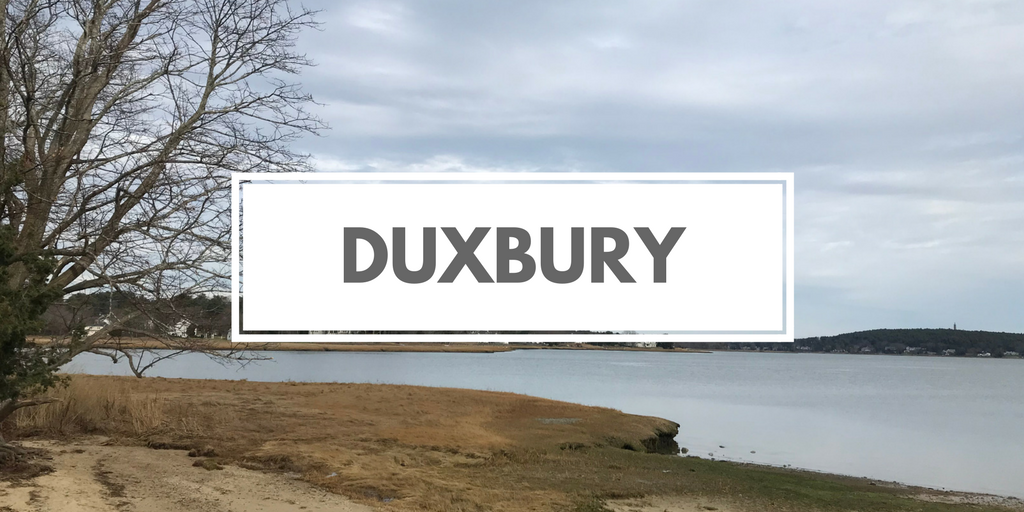
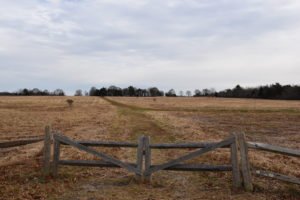
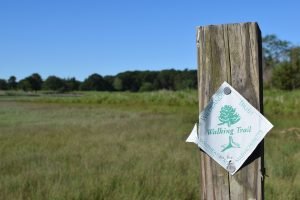
The town of Duxbury is a coastal town that is about 35 miles south of Boston. It is bordered by the Cape Cod Bay, Duxbury Bay, Kingston Bay, Plymouth, Kingston, Pembroke and Marshfield. Duxbury has an interesting conservation landscape covers many spectrums: ocean views, deep forests, and marsh land. The western half of the town is particularly rich in conservation resources. Additionally, Duxbury is the sixth largest cranberry producer in Massachusetts. If you know anything about cranberries, being this significant of a producer means a large amount of land is devoted to this crop - instead of condos and houses.
Total Area: 37.6 sq. miles
Land Area: 23.8 sq. miles
Population: 15,059
Density: 632 per sq. mile
(source: Duxbury Wikipedia Page)
Conservation land in Duxbury comes from many sources including: (1) Town resources (2) Audubon Society and (3) Wildlands Trust. For each trail included in our database, we've listed the agency responsible for maintaining and preserving the resource.
Dubxury was initially settled in 1624 and not formally incorporated until 1637. Much of Duxbury's history can be tied to nearby Plymouth. Many of the first settlers lived in Duxbury for farming purposes during the warm months and then returned to Plymouth during the winter. Additionally, the original incorporated land included what is now known as Pembroke. Duxbury was primarily a farming community throughout its early history until the Revolutionary War.
Following the Revolutionary War, shipbuilding really took off in the area - including in Duxbury. The industry flourished for many years however began to slow with the introduction of steamships and railroads. Although this had a dramatic and devastating effect on the economy, the upside was that Duxbury became known as a wonderful and idyllic summer town. The completion of Duxbury & Cohasset Railroad in 1871 increased the accessibility. A round-trip train ticket from Boston to Duxbury was only $1.50!
Like many other South Shore towns, Duxbury's population and popularity exploded between 1960-1980 beginning with the introduction of Route 3.
(source: Duxbury Wikipedia Page)
Duxbury Historical Society
Town of Duxbury
Duxbury Conservation Commission